For Australian buyers comparing electric SUVs in 2026, the XPENG G6 combines a starting price of $51,800 before on-road costs with up to 525km of WLTP range, an 800V electrical system and DC charging of up to 451kW. The Long Range can charge from 10% to 80% in about 12 minutes under suitable conditions, while the AWD Performance produces 358kW and 660Nm and reaches 100km/h in 4.13 seconds. A five-star 2024 ANCAP rating, 571L boot and 6kW V2L output add family practicality, while an 80.8kWh LFP battery avoids relying on a very large battery pack.
Australia’s electric SUV market in 2026 gives buyers far more choice than it did only a few years ago, so range alone is no longer enough for a useful comparison. Purchase price, charging time, battery chemistry, energy use, luggage space, safety results and local equipment all affect how a vehicle works over several years of ownership.
The G6 enters that comparison at $51,800 before on-road costs for the RWD Standard Range. The RWD Long Range costs $56,800, the AWD Performance $63,800, and the Performance Black Edition $66,800, creating a $15,000 spread from the least expensive model to the highest-priced version.
| 2026 Australian variant | Price before on-roads | Battery | WLTP range | Maximum DC rate |
|---|---|---|---|---|
| RWD Standard Range | $51,800 | 68.5kWh LFP | up to 480km* | up to 382kW |
| RWD Long Range | $56,800 | 80.8kWh LFP | 525km | 451kW |
| AWD Performance | $63,800 | 80.8kWh LFP | 510km | 451kW |
*Range can vary with wheel specification and homologation figures. Australian material for the 2026 range lists different figures by variant and equipment.
That price structure allows a buyer to separate everyday requirements from equipment that may rarely be used. A household travelling 40–60km on most weekdays may not need the additional battery capacity of the Long Range, while someone regularly covering 300km or more between cities can make better use of its 525km WLTP rating.
Range is only one part of long-distance use, because the time spent recovering battery capacity becomes important once a trip exceeds the available charge. The 2026 G6 uses an 800V silicon-carbide electrical architecture with 5C charging technology rather than the lower-voltage layout still found in many EVs.
On the Long Range and AWD Performance, the stated maximum DC input reaches 451kW, with a 10–80% charge possible in about 12 minutes when battery temperature, charger output and other conditions allow it. XPENG also states that as much as 427km of range can be added in 15 minutes under suitable test conditions.
A 451kW vehicle does not automatically charge at 451kW every time it is connected. Public charger capacity, battery state of charge, temperature and the charging curve determine the rate seen during an actual stop.
That distinction matters in Australia because a 150kW or 350kW public charger cannot supply 451kW simply because the vehicle can accept it. The benefit of the higher ceiling is greater compatibility with faster stations as the network develops, while the 800V system can still shorten charging sessions on suitable existing equipment.
Battery chemistry also deserves attention. The 2026 Australian G6 range uses lithium iron phosphate batteries, with 68.5kWh in the Standard Range and 80.8kWh in the Long Range and Performance versions. LFP chemistry avoids nickel and cobalt in the cathode and is widely used where durability, thermal stability and repeated charging are priorities.
Energy consumption provides more context than battery capacity alone. XPENG lists about 17.9kWh/100km for the 2026 RWD Long Range on 20-inch wheels and 18.4kWh/100km for the AWD Performance, while a CarExpert test of the Performance recorded 16.8kWh/100km during roughly 24 hours of mixed suburban, freeway and regional driving.
Real consumption will vary, but those numbers help explain why an 80.8kWh battery can support more than 500km of WLTP range. At a hypothetical 18kWh/100km, 300km of travel uses about 54kWh before charging losses are considered, leaving useful capacity for normal variations in traffic, weather and route conditions.
Performance differs substantially across the 2026 range. The Standard Range rear motor produces 185kW and 440Nm, while the Long Range raises power to 218kW with the same 440Nm torque figure. Their claimed 0–100km/h times are 6.94 and 6.7 seconds respectively.
The AWD version adds a front motor and raises combined output to 358kW and 660Nm, reducing the 0–100km/h figure to 4.13 seconds. It still carries a 510km WLTP rating, so choosing the faster model does not reduce official range below 500km.
That extra performance comes with additional mass. Australian specifications list a kerb weight of about 2,115kg for the RWD Long Range and 2,220kg for the AWD Performance, a difference of 105kg. Payload is listed at 475kg and 470kg respectively, information worth checking for families travelling with several adults and luggage.
Exterior dimensions explain where the G6 sits among family SUVs. The 2026 model measures about 4,758mm long, 1,920mm wide and 1,650mm high, with a 2,890mm wheelbase. Those dimensions provide a five-seat cabin without moving into the footprint of a large three-row SUV.
The boot holds 571 litres with the rear seats in use and 1,374 litres with them folded. A 5.8m turning radius is listed for the Long Range and Performance versions, which matters in multi-storey car parks because a 1.92m-wide vehicle already takes up much of a typical parking bay.
Its aerodynamic work also contributes to motorway efficiency. XPENG lists a drag coefficient of 0.248 Cd, while the body uses a sloping rear roof rather than a square tail. At higher speeds, aerodynamic resistance becomes a larger part of energy use, so body shape has a measurable relationship with motorway consumption.
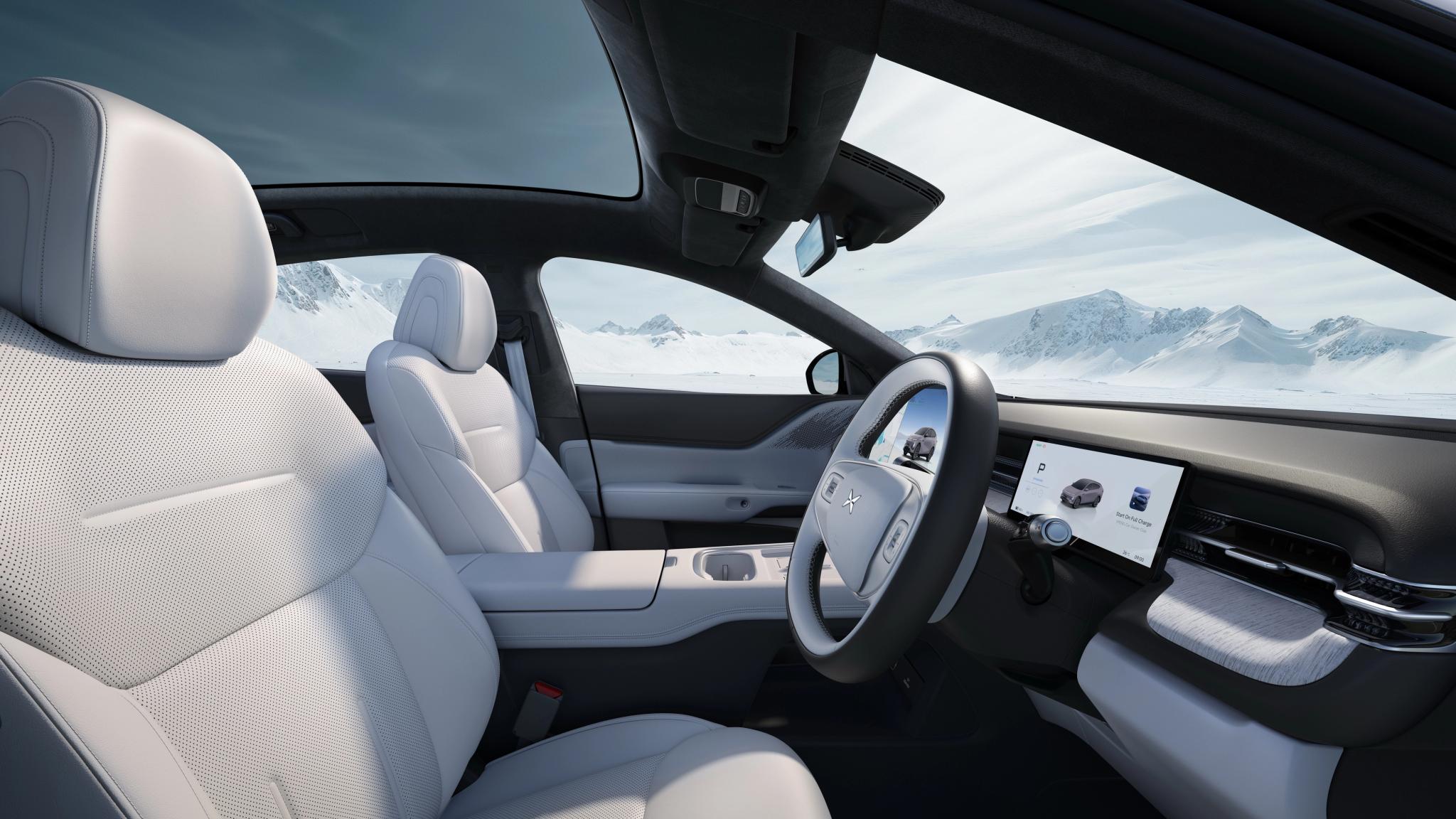
Cabin equipment is similarly specific rather than limited to a long touchscreen specification sheet. The 2026 Australian G6 has a 15.6-inch central display and 10.25-inch digital instrument cluster, alongside wireless Apple CarPlay and Android Auto. An 18-speaker sound system is also listed for the local specification.
Phone-based access, an NFC key card, over-the-air software updates and voice functions are included in the digital system. Physical usability should still be assessed during a test drive, particularly for someone moving from a car with separate buttons for climate, mirrors and frequently used cabin functions.
Safety provides a more independent set of numbers. ANCAP awarded the G6 five stars under its 2024 protocols, with 88% for Adult Occupant Protection, 86% for Child Occupant Protection, 81% for Vulnerable Road User Protection and 80% for Safety Assist. The rating applies to all variants covered by the Australian assessment.
Seven airbags are listed, including a centre airbag between the front occupants. Standard assistance equipment includes autonomous emergency braking, lane-keeping functions, lane-departure warning, emergency lane keeping, adaptive cruise control and advanced speed assistance. ANCAP states that its G6 rating remains valid until December 2031.
Safety-assistance equipment should support normal driving rather than replace observation. Buyers can use a longer test drive to judge how often lane, speed and collision warnings intervene on the roads they use every week.
Practical electrical use extends beyond charging the vehicle. The 2026 G6 supports Vehicle-to-Load output of up to 6kW, allowing energy from the traction battery to supply compatible external electrical equipment. That can be useful for camping equipment, portable appliances or work equipment where mains power is unavailable.
For perspective, a 1,000W appliance running continuously for one hour consumes about 1kWh. Even allowing for conversion losses and keeping a sensible battery reserve, an 80.8kWh G6 battery has considerably more stored energy than a normal portable power station used for weekend outdoor trips.
AC charging remains more relevant than the 451kW headline for owners who charge overnight. The Australian G6 supports 11kW AC hardware, and XPENG lists roughly 9.2 hours for a 5–100% charge on the 80.8kWh versions under suitable conditions. A lower-powered home connection will take longer.
That difference is worth considering before buying any ev suv australia, because home electrical capacity often determines everyday charging convenience more than the maximum rate printed in a brochure. A buyer with reliable overnight charging may visit public rapid chargers only during longer trips.
Tyres and suspension also affect daily comfort. The 2026 update uses a front double-wishbone suspension layout, while XPENG says new Michelin acoustic tyres reduce cabin noise by a claimed 10dB. Because decibels use a logarithmic scale, a 10dB change is much larger than the number may first suggest, although road surface and tyre specification will affect what occupants actually hear.
The G6 still asks buyers to consider ownership support alongside technical specifications. XPENG entered the Australian market in 2024, making its local history shorter than that of many established manufacturers. Anyone planning to keep a vehicle for five to eight years should check the current warranty wording, service locations, parts arrangements and roadside support available in their area before ordering.
Price should therefore be compared with equipment rather than treated as an isolated number. Moving from the $56,800 Long Range to the $63,800 Performance costs $7,000 before on-road charges, adding all-wheel drive, 358kW output and a 4.13-second acceleration claim while reducing WLTP range from 525km to 510km.
For a family using the vehicle mainly for commuting and holiday travel, the Long Range offers the highest official range and the same 451kW maximum DC rate as the Performance. Buyers who regularly travel in poor weather or simply want stronger acceleration may find the $7,000 AWD step easier to justify.
A useful test drive in 2026 should therefore cover more than acceleration. Spend 30–45 minutes checking rear-seat access, visibility, ride quality over broken surfaces, touchscreen operation, driver-assistance behaviour, parking-camera clarity and noise at motorway speed, then inspect whether 571L of luggage capacity suits the equipment normally carried.
The G6 deserves consideration because its numbers are competitive across several areas at once: $51,800 entry pricing, up to 525km WLTP range, 451kW charging on selected versions, a 12-minute 10–80% claim, 571L of luggage space and four ANCAP assessment scores of 80% or higher. For an Australian buyer, the remaining question is whether those measured capabilities match the routes, charging access and cabin requirements that will be used every week.