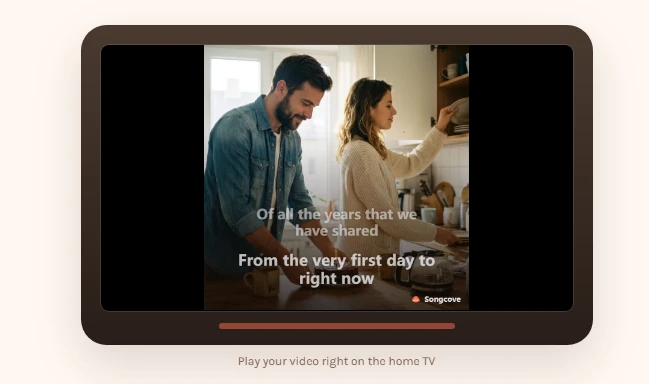
AI turns personal memories into music by combining natural language processing, lyric generation, and AI music composition. A user provides names, dates, stories, favorite places, and shared experiences, then the system organizes those details into lyrics before matching them with melody, rhythm, vocals, and instrumentation. By 2025, millions of people had already used AI creative tools for writing, images, and music, while personalized digital gifts continued growing faster than many traditional gift categories. Instead of producing generic songs, modern AI models build structured stories that reflect real relationships, making each song feel connected to the people and memories behind it.
People have always connected memories with music. A familiar melody can bring back a holiday, a graduation, or a wedding years later. AI now allows anyone to create an original song without learning music theory or recording in a studio. During 2024 and 2025, AI music platforms expanded rapidly as text generation and audio models became more accurate, allowing users to create complete songs within minutes instead of waiting several days for manual production.
The process begins with information rather than music. Users usually enter names, important dates, favorite places, shared hobbies, personal messages, or memorable conversations. Many platforms also ask for the relationship between the sender and the recipient, whether the song is for a parent, spouse, child, friend, or best gift ideas for boyfriend. The more specific the details, the more natural the lyrics become.
A story with ten detailed memories usually produces more personal lyrics than one containing only a few short sentences. AI arranges those memories into verses, choruses, and bridges while keeping the timeline easy to follow.
After collecting the story, the language model starts writing lyrics. Instead of copying every sentence exactly, it identifies recurring themes such as gratitude, friendship, love, encouragement, or celebration. Large language models are trained on extensive text collections containing different writing styles, allowing them to create lyrics that sound conversational rather than repetitive. By 2025, several commercial AI music systems supported dozens of musical styles and multiple languages within the same workflow.
The lyrics then move into music generation. AI predicts melodies that match both the rhythm of the words and the selected genre. Pop songs usually contain shorter melodic phrases and repeated choruses, while country music often places more attention on storytelling. Acoustic arrangements generally leave more space for vocals, whereas electronic music uses layered synthesizers and stronger percussion.
| User Input | AI Output |
|---|---|
| Personal memories | Song structure |
| Relationship details | Original lyrics |
| Preferred genre | Melody and harmony |
| Mood selection | Vocal style |
| Occasion | Instrument arrangement |
Matching music with emotion also depends on tempo. Songs celebrating birthdays or graduations often use faster beats between 110 and 140 BPM, while anniversary or wedding songs frequently remain below 90 BPM. Piano and acoustic guitar are common choices for sentimental stories, while pop and indie productions often include drums, bass, keyboards, and layered backing vocals to create a fuller sound.
Modern AI systems also make editing easier than traditional songwriting. If one verse feels too formal or one chorus repeats too often, users can regenerate only that section instead of replacing the entire song. Some platforms allow multiple lyric revisions before audio generation begins, reducing unnecessary production time. This editing process became much smoother after large language models improved substantially between 2023 and 2025.
Many users revise the chorus several times because it is usually the section people remember after listening only once or twice.
Personalization goes beyond lyrics. Some services allow users to choose male or female vocals, solo or duet performances, different accents, instrumental versions, and various production styles. Others include optional cover artwork generated from the same story used to write the lyrics. These additions help transform a digital audio file into a complete keepsake that can be shared during birthdays, weddings, anniversaries, retirements, Mother's Day, Father's Day, or holiday celebrations.
Another reason personalized AI songs continue gaining attention is accessibility. Hiring professional songwriters, vocalists, musicians, recording engineers, and mixing specialists may require several weeks and a much larger budget. AI shortens that process considerably while still allowing users to customize nearly every stage. Many first-time users finish their projects in less than one hour, depending on the number of revisions they choose.
Privacy also matters because personal stories often contain names, family events, or private messages. Reputable services explain how submitted information is processed and whether users can remove project data after downloading their songs. Reading those policies before uploading personal details helps people understand how their information will be handled.
For people looking for a meaningful digital present, an AI-generated song offers something that ordinary products cannot easily provide. Instead of focusing on the item itself, the attention stays on shared experiences, conversations, milestones, and future plans. That is why personalized songs continue appearing as birthday surprises, anniversary gifts, wedding keepsakes, graduation presents, and family celebrations across many countries.
People searching for a personalized music experience can explore gift for boyfriend options that allow memories, stories, and personal messages to be transformed into original songs with different genres, vocal styles, and arrangements.
AI continues improving its ability to understand language, musical structure, and emotional expression. Future systems will likely produce smoother vocal performances, more natural harmonies, better multilingual support, and additional editing options while keeping the same purpose: helping people preserve meaningful memories in a song that can be replayed for many years.